

LED Displays: Anti-Moiré Surface Treatment, Enabling Professional Filming Experience on LED Screens
LED Display Technical Insights
RIGARD - LED displays Manufacturer
LED Displays: Core Principles and Selection Standards for Refresh Rate
Refresh rate is the core hardware indicator for measuring LED display performance, referring to the number of times the screen fully refreshes and redraws the image per second, in hertz (Hz). Unlike traditional display equipment, LED screens rely on pulse-width modulation technology to drive lamps to light up row by row through scanning, rather than staying continuously lit, so their refresh rate values are far higher than regular display equipment, and it is also the key basis for distinguishing screen image quality grades and fitting different application scenarios.
The Core Value of Refresh Rate: Solving Filming Flicker and Low-Brightness Quality
The core value of refresh rate is not to improve naked-eye intuitive clarity, but to solve flicker and scan line problems in filmed images, while optimizing the display quality of low-brightness images. In daily visual experience, differences between refresh rate levels are hard for the naked eye to catch, but the rolling shutter of phones, cameras, and other equipment can precisely capture the ripples and flicker produced by screen refresh, which is the core reason high-end scenarios have strict refresh rate requirements.
Three Refresh Rate Levels and Selection Standards
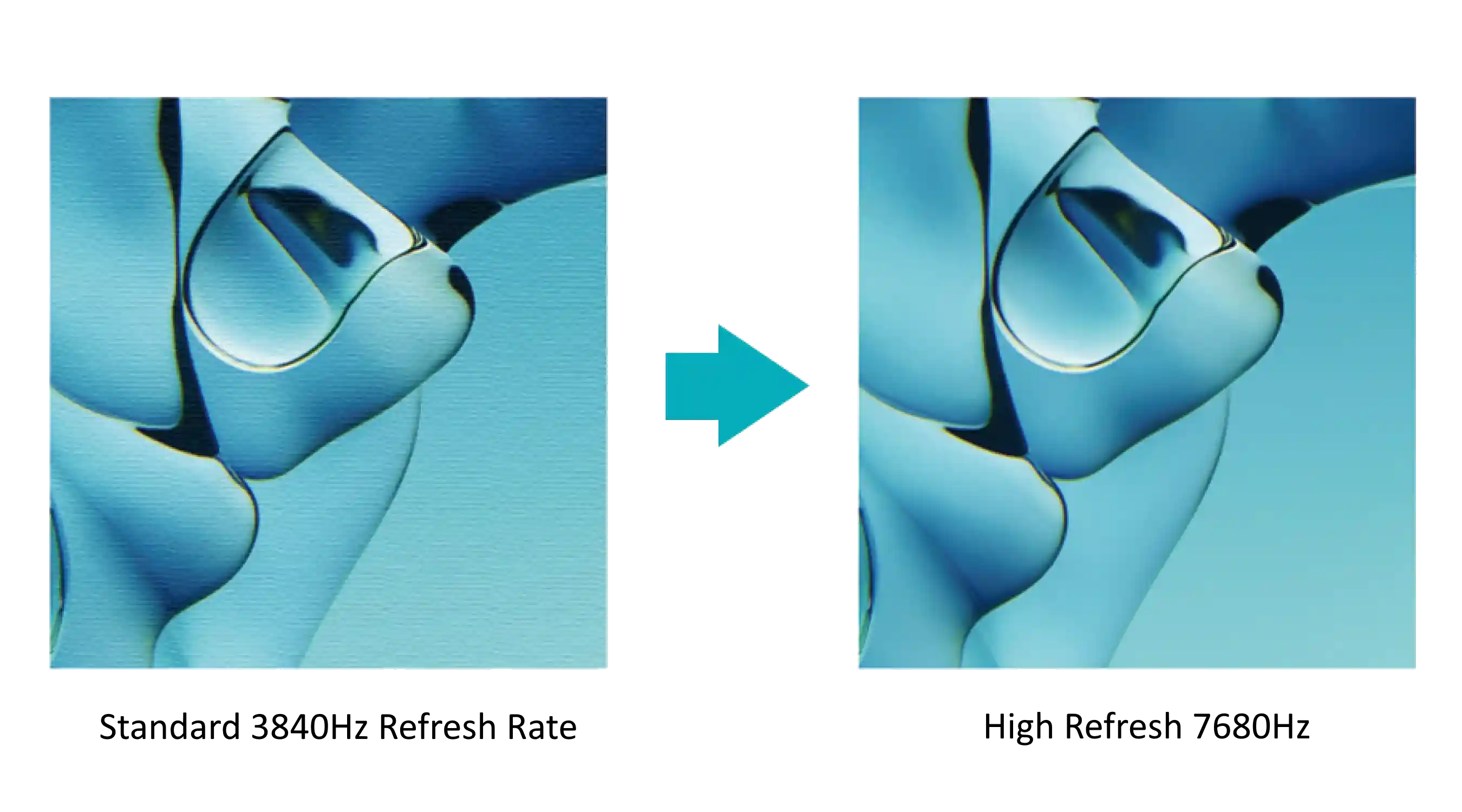
1920Hz is the basic refresh rate, meeting naked-eye daily viewing needs with stable images and no obvious flicker, fitting regular commercial scenarios of pure visual display with outstanding cost-effectiveness, but black horizontal scan lines easily appear during filming and recording, so it is not suited to image capture scenarios. 3840Hz is the mainstream high-refresh standard, the preferred choice for all kinds of event display, live broadcast, and meeting scenarios; regular filming equipment records clean images without ripples, balancing performance and cost with extremely strong versatility.
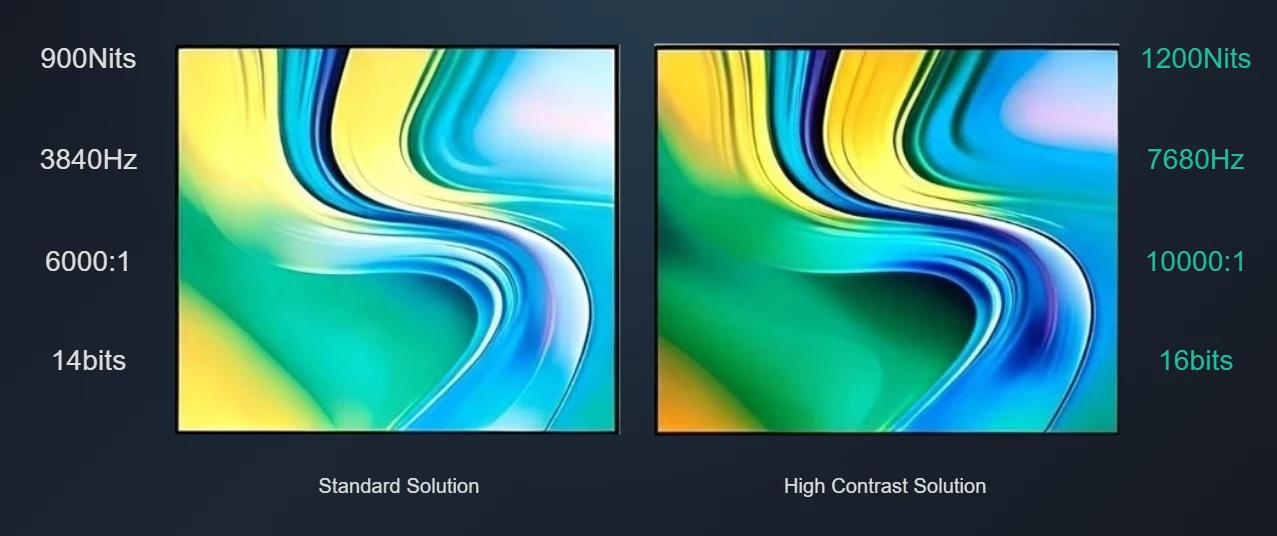
7680Hz is the top broadcast-grade refresh rate, purpose-built for high-end imaging scenarios, fitting professional scenarios such as high-speed photography, slow-motion filming, and virtual production, with images remaining pure and stable even under high shutter parameters.
High Refresh Is the Coordinated Result of the Whole Hardware Set
Note that screen refresh rate is not a single module parameter, but requires matching driver ICs, sending and receiving cards, and video processors; the whole hardware set must coordinate to achieve the rated high refresh effect and avoid performance shrinkage from mismatched hardware.
The key to refresh rate selection is not that a higher number is always better, but matching filming needs: 1920Hz is enough for pure visual display, 3840Hz is preferred for regular live broadcast and meetings, and 7680Hz is needed for broadcast-grade high-speed filming, while confirming the drive and processing equipment meets the standard at the same time.
Thank you. We will contact you shortly.
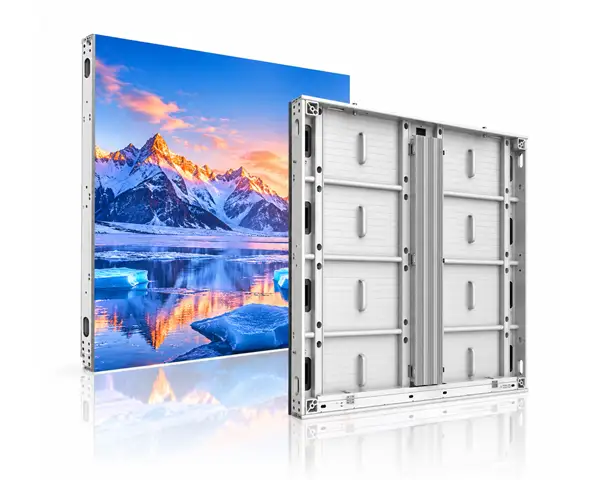
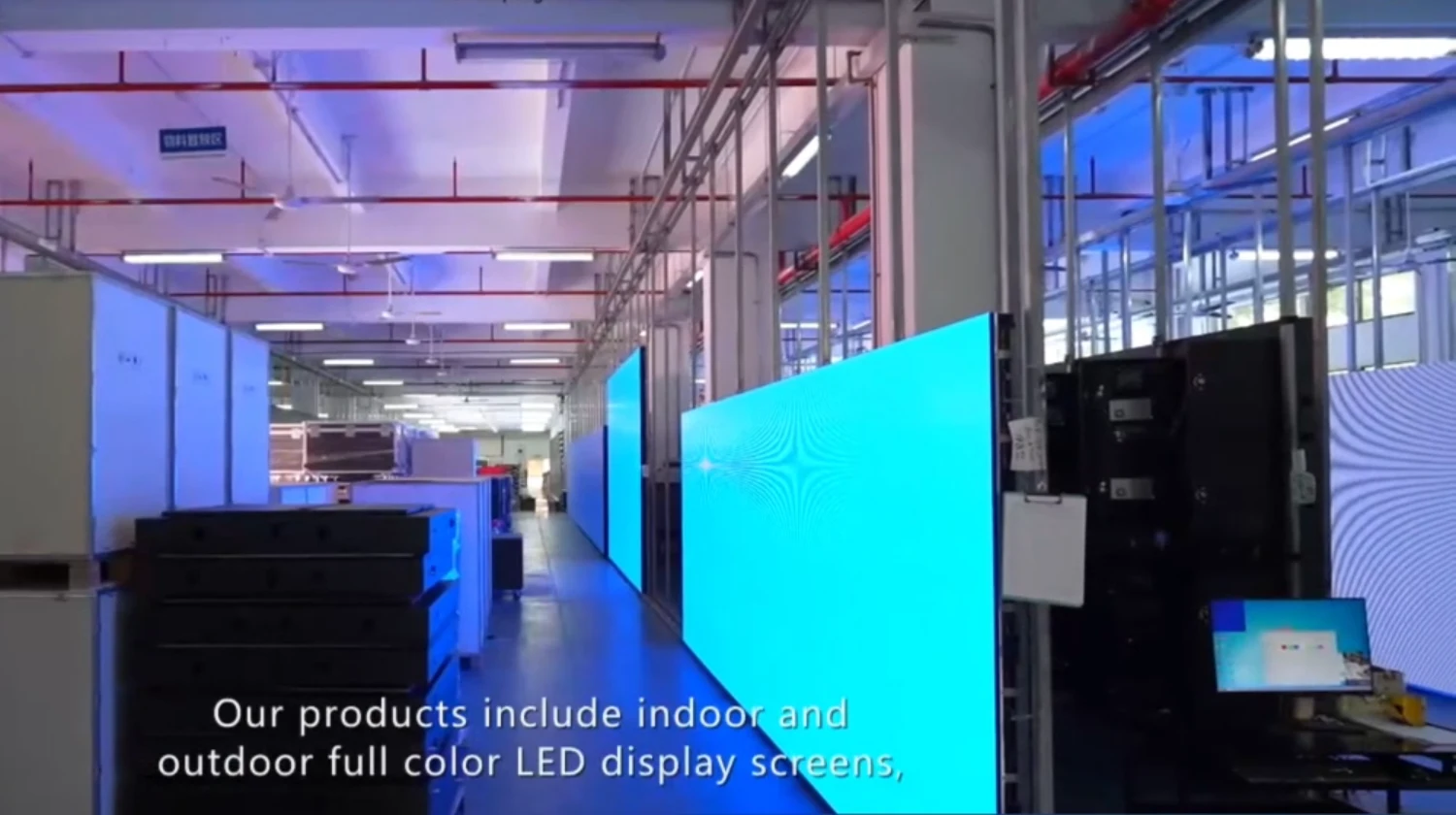
- LED screen manufacturer direct from factory
- Over 10 years of LED screen production experience
- In-house SMT production line
- 10 years of LED screen foreign trade experience
- Complete certifications: FCC, CE, RoHS