LED Display Technical Insights

RIGARD - LED displays Manufacturer

Indoor LED Displays: Flip-Chip COB Process, the Core Packaging Technology of High-End LED Panels
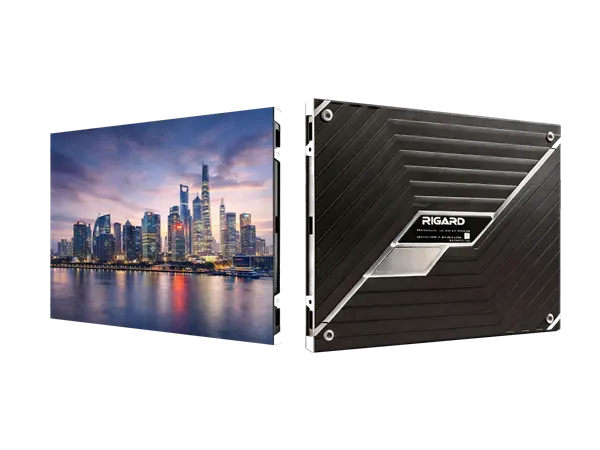
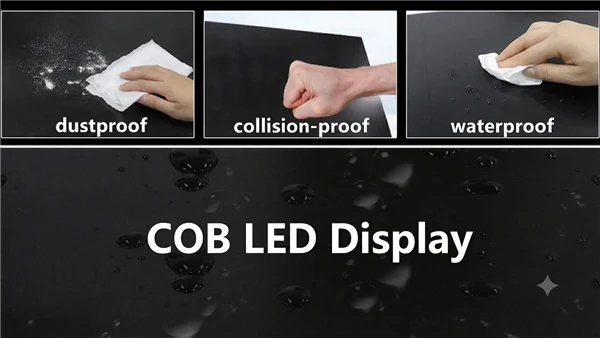
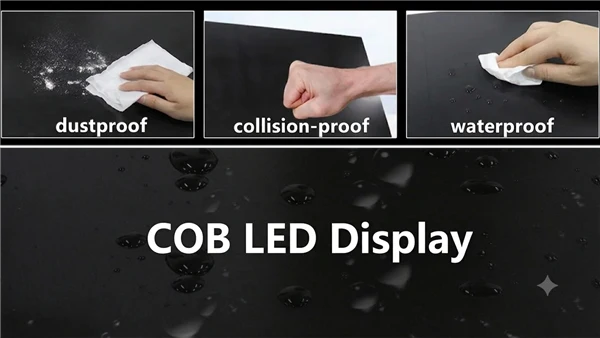
Flip-chip COB is an advanced chip-on-board packaging process for ultra-fine-pitch indoor LED displays, discarding gold wire bonding, effectively reducing thermal resistance, cutting power consumption by up to 40%, and providing integrated surface protection and better image quality.
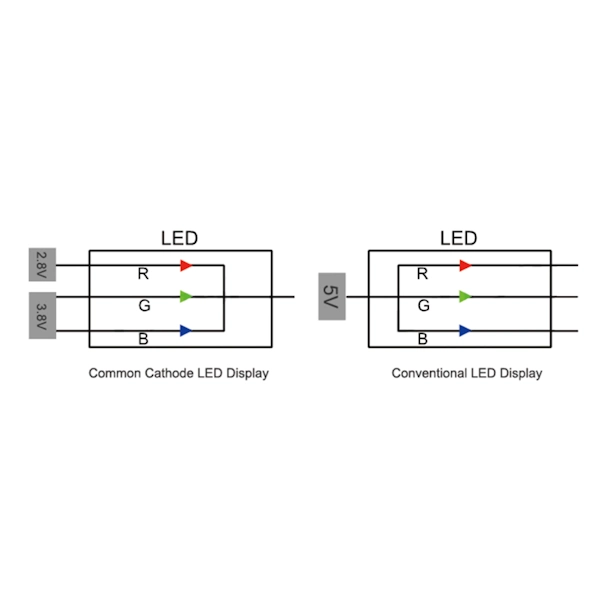
Indoor LED Displays: Common-Cathode Technology Reduces Heat and Saves Electricity at the Source
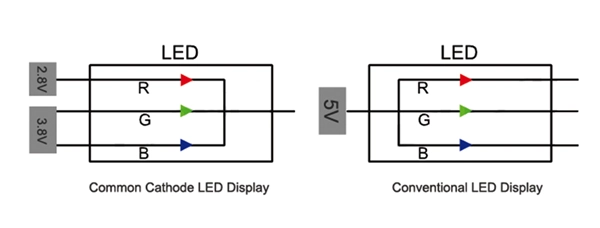
Common-cathode drive technology reduces invalid electrical loss at the power supply source, and Rigard indoor LED displays use 30%-50% less power than common-anode solutions, simultaneously reducing screen heat and air conditioning load for long-term cost reduction and efficiency gains.
Indoor LED Displays: The Advantages of a Fully Front-Maintenance Solution
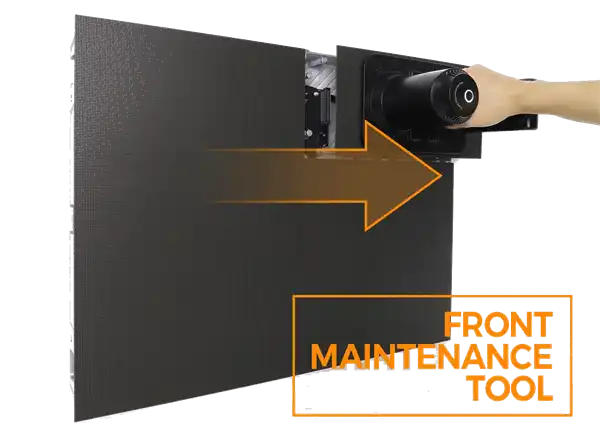
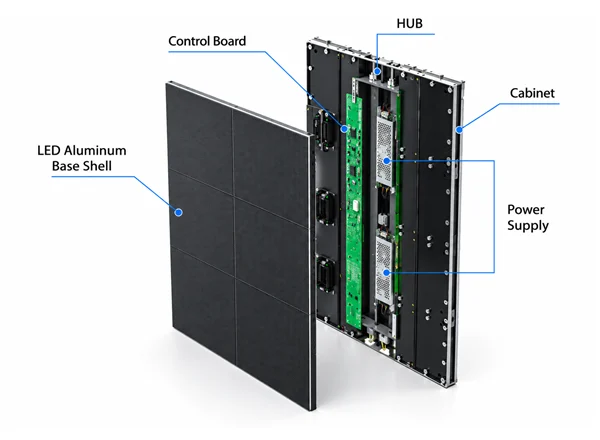
Rigard SN43 and SN169 indoor LED displays use a fully front-maintenance structure, supporting wall mounting with zero rear service aisle, releasing depth space, reducing steel structure materials by over 40%, and the two series cover all indoor scenarios.
Indoor LED Displays: What to Do When Variable Indoor Light Makes the Screen Hard to See?
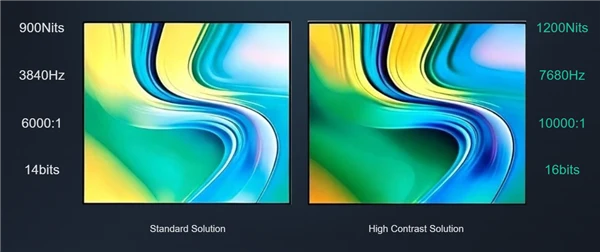
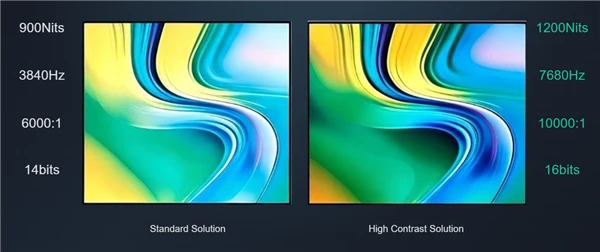
The Rigard SN169 flip-chip COB fine-pitch LED screen carries a real-time dynamic image processing engine, dynamically adapting brightness, precisely adjusting highlights and shadows, and converting SDR to HDR in real time, handling variable indoor light such as backlight and ceiling lights for clear images around the clock.
Indoor Irregular Wall LED Screen Solutions: Curved Splicing Without Color Shift, Consistent Full-View Experience
Rigard SN43 and flip-chip COB fine-pitch series indoor LED screens use 160° to 170° ultra-wide viewing angles and high-precision splicing to fit curved, ring, and cylindrical irregular walls, with curved splicing without color shift and consistent viewing experience at every position.
Indoor LED Displays: A Moiré-Free Solution
The Rigard SN169 series (P0.78–P1.56) LED video wall pairs a 3840Hz/7680Hz ultra-high refresh rate with a dedicated anti-moiré optical surface treatment, achieving pure display with no scan lines and no moiré, fully fitting 4K camera live broadcast.
Indoor LED Displays: A Dedicated Display Solution for Noise-Free Environments
Rigard series indoor LED displays use a fanless fully passive heat dissipation architecture, achieving true 0dB silent operation while combining flip-chip COB image quality and long-life design, fitting quiet spaces such as churches, high-end meeting rooms, studios, and libraries.
LED Displays: Anti-Moiré Surface Treatment, Enabling Professional Filming Experience on LED Screens
Anti-moiré surface treatment weakens the periodic characteristics of the pixel matrix through a special random-microstructure optical surface, reducing the probability of optical interference with the camera sensor; working with a 3840Hz–7680Hz high refresh rate, it makes LED screen live broadcast and recording images clean and clear.
LED Displays: Core Advantages of Cable-Free Design
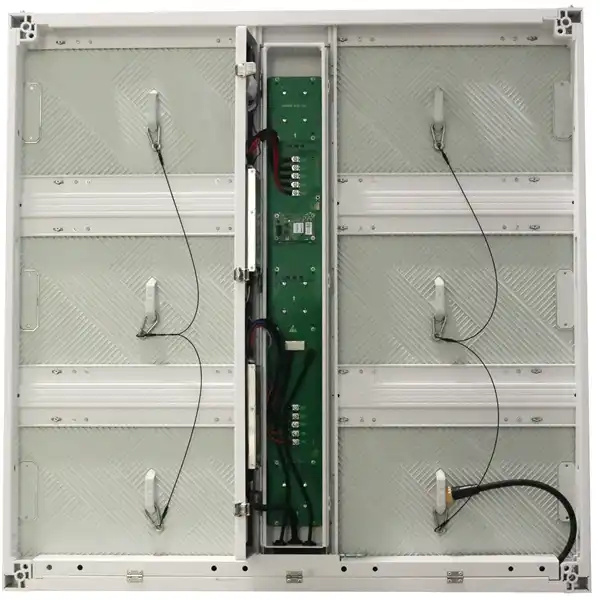
Cable-free design with no exposed cables integrates power and signal routing inside the cabinet; the outdoor SW960/SW1000 series avoids cable aging and water intrusion and fits 90° corner creative shapes, while the indoor SN43/SN169 series achieves 32mm slim wall mounting and fully front maintenance.
LED Displays: Core Principles and Selection Standards for Refresh Rate
Refresh rate is the number of times (Hz) an LED screen fully redraws the image per second; LEDs use PWM row-by-row scanning drive, 1920Hz meets daily viewing, 3840Hz fits regular filming and live broadcast, 7680Hz is the broadcast-grade standard, and high refresh requires driver IC and video processor coordination.
LED Displays: Brightness Parameters and Scenario Adaptation Logic
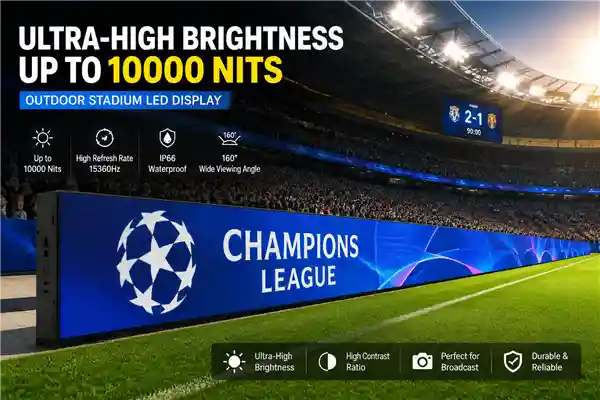
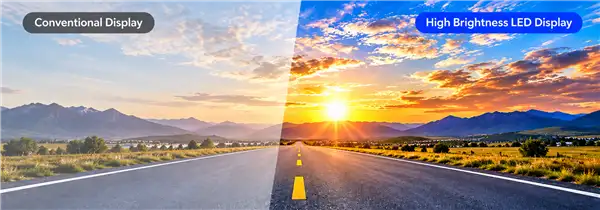
Brightness is measured in nits (cd/㎡), and LED screens should match ambient light: indoor 400–1200cd/㎡ (800cd/㎡ is the golden brightness), semi-outdoor 1500–2500cd/㎡, outdoor no less than 4500cd/㎡, and high-brightness screens must retain complete grayscale layers.
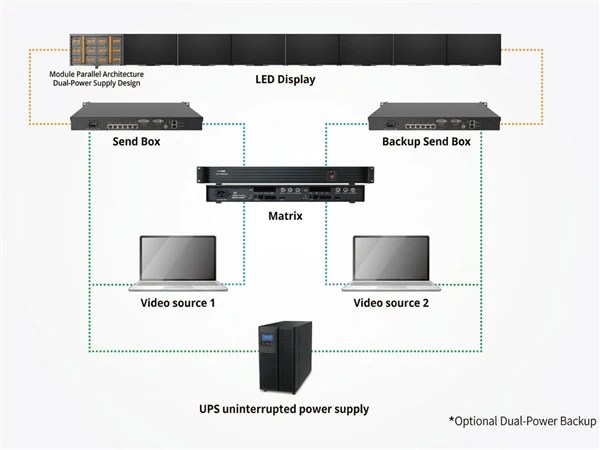
Dual Power & Dual Signal Redundant Ports | High-Reliability Redundancy Technology for LED Displays
aaa
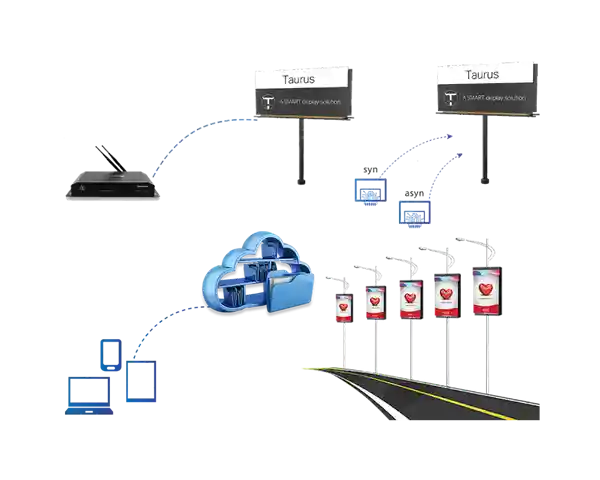
Cloud Wireless Intelligent Management: Remote Publishing via Phone and Computer, Enabling Diverse Advertising Operations on LED Screens
aaa
Outdoor LED Displays: Advantages of the IP68 Protection Rating
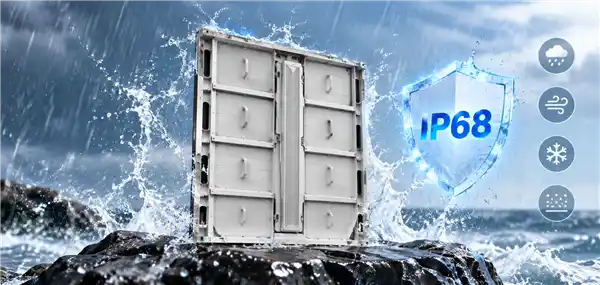
IP protection ratings follow IEC60529: IP65 resists low-pressure spray, IP67 supports short immersion in 1 meter of water, IP68 can withstand long-term continuous immersion; the SW1000 achieves whole-machine IP68 and works with cable-free, fanless heat dissipation and aluminum cabinets for truly reliable outdoor protection.
Outdoor LED Displays: Common-Cathode Technology Explained
Common-cathode drive achieves independent power supply for the RGB three colors, eliminating invalid voltage drop; outdoor SW900/SW1000 screens cut power consumption 30%–50% versus common-anode, reducing heat generation and slowing light decay at the source, and lowering TCO and carbon emissions in high-electricity-price regions.
Outdoor LED Displays: 5 Hardware Indicators You Need to Focus On
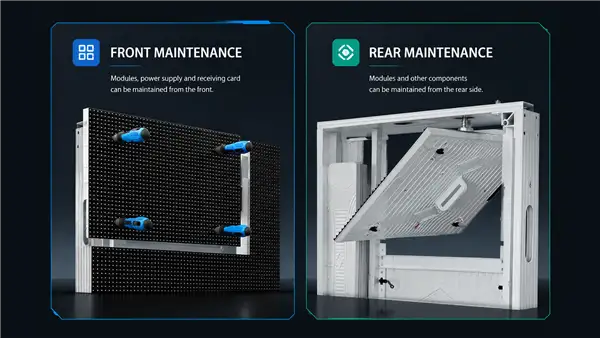
Five hardware indicators for outdoor advertising network selection: IP68 protection rating, fanless passive heat dissipation, front and rear dual maintenance, common-cathode drive (power consumption cut 30%–50%), and cloud remote control, all fully covered by the Rigard SW1000/SW960.
Outdoor LED Displays: Front & Rear Dual Maintenance, Fitting Diverse Installation Scenarios
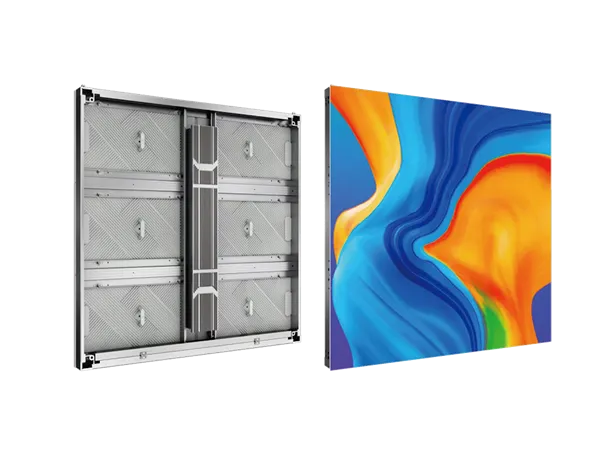
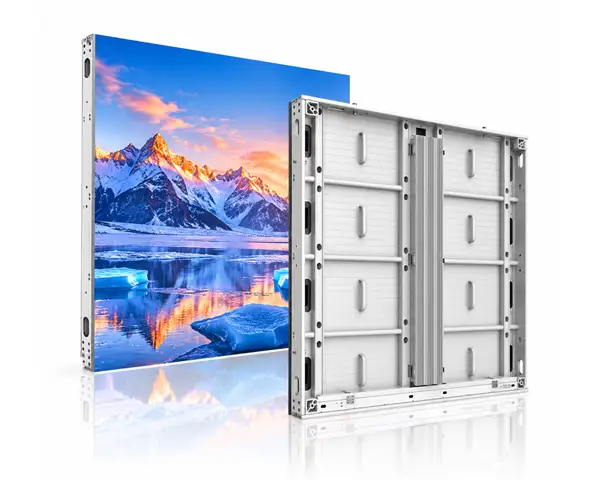
Front maintenance fits scenarios with no rear space such as wall-mounted curtain walls; rear maintenance fits projects with reserved aisles such as columns and rooftops; the SW1000 and SW960 use the same cabinet compatible with front and rear dual maintenance, with no need to lock the maintenance method early and lower solution-change risk.
Outdoor LED Displays: Is Fanless Passive Heat Dissipation Reliable?
Fanless passive heat dissipation relies on large-area metal structures of aluminum back covers and power boxes for natural heat conduction, with zero noise, zero wearing parts, and blocking dust and water vapor intrusion; paired with optional common-cathode drive it cuts power consumption another 30%–50%, a mature, reliable outdoor heat dissipation solution.
Outdoor LED Displays: Advantages of Die-Cast Aluminum Cabinets
Die-cast aluminum one-piece cabinets have excellent heat conduction, high structural strength, corrosion resistance, and light weight, and support front and rear dual maintenance and 90° corner splicing; compared with iron cabinets, the SW960/SW1000/SWHD have lower full-cycle cost.
Outdoor LED Screen
RIGARD -

China LED Display Manufacturer

  • LED screen manufacturer direct from factory
  • Over 10 years of LED screen production experience
  • In-house SMT production line
  • 10 years of LED screen foreign trade experience
  • Complete certifications: FCC, CE, RoHS
Thank you. We will contact you shortly.
Leave a Message
Please enter your email address or phone number.
Send
Contact Us
  • Shenzhen Rigard Optoelectronics Co., Ltd
  • Building B, Henghai Industrial Park, No. 16 Guangming Avenue, Tangwei Community, Guangming District, Shenzhen, Guangdong, China.
  • info@rigardled.com
  • +86 199 2518 9799
Home
Contact 0
WhatsApp
To Top
0