Outdoor LED Displays: Common-Cathode Technology Explained
Edit By: RIGARD
Date: Oct 8, 2026
In the global digital out-of-home (DOOH) advertising industry, the electricity bills, high-temperature aging, and heat dissipation load brought by continuous large-screen operation have become long-term operations costs that operators cannot ignore. Especially in Europe, industrial and commercial electricity prices can reach 2–3 RMB per kWh, and with multi-point advertising networks and business district and rooftop large screens running 7×24 without interruption, electricity costs keep eroding project revenue. Many buyers only focus on screen purchase cost but ignore the decisive influence of the drive architecture on full-life-cycle cost; common-cathode drive is not just a "power-saving feature," but an underlying technology solution for large screens to resist outdoor sun exposure and high temperature and extend equipment life.
Underlying Architecture: Core Differences Between Common-Anode and Common-Cathode
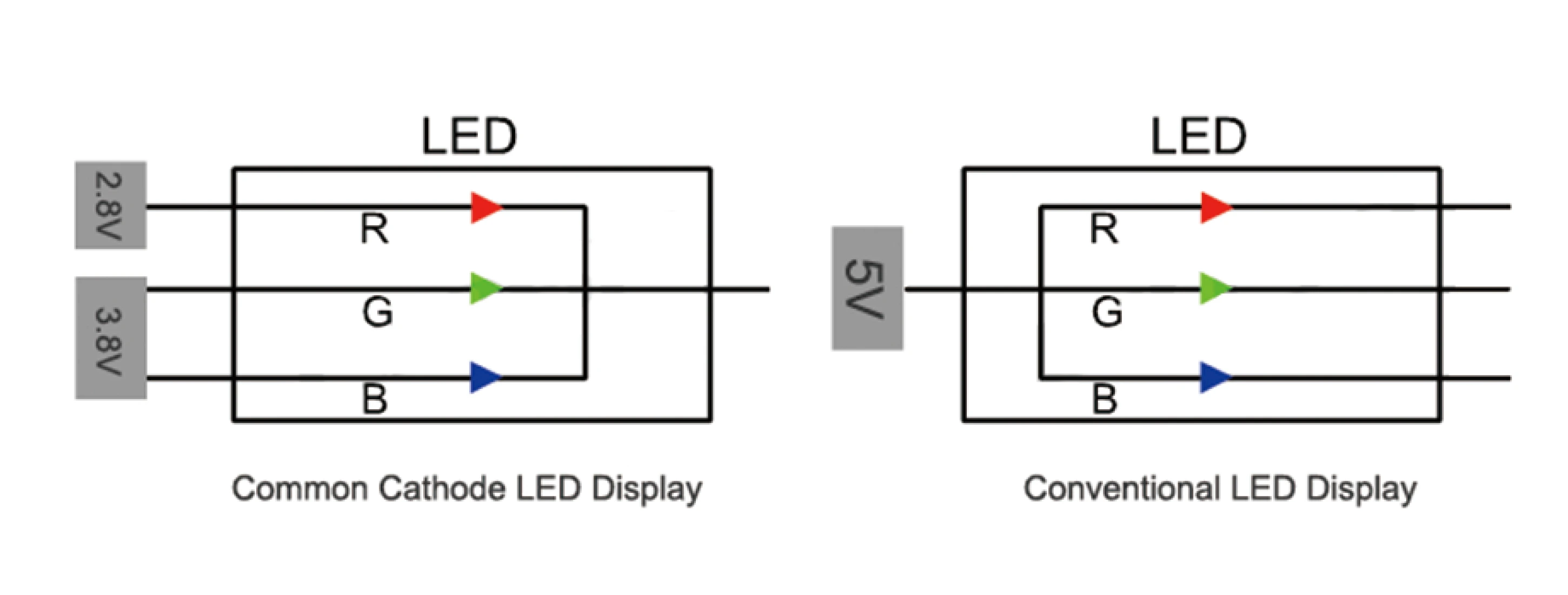
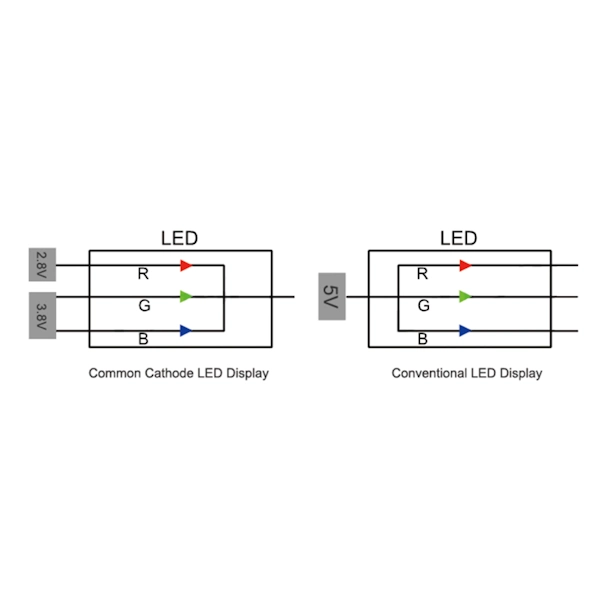
The traditional common-anode solution uses uniform voltage output, with the RGB three-color chips sharing one power supply loop. But the red, green, and blue chips themselves have completely different working voltage requirements; the red chip needs a lower voltage, and uniform high-voltage power supply produces a large amount of excess voltage drop, which is not converted into image brightness but is all dissipated as heat, continuously raising the internal temperature of the screen.
The core innovation of common-cathode drive is achieving independent power supply for the RGB three colors, matching the red, green, and blue chips with their respective suitable working voltages, eliminating invalid voltage loss and reducing heat generation at the circuit source, rather than relying solely on later heat dissipation to deal with the already-generated high temperature.
Both the SW900 and SW1000 outdoor advertising LED displays support the optional common-cathode drive solution; at the same time, the indoor flip-chip COB fine-pitch SN169 and the cable-free module UT series can also carry the technology, achieving full indoor-outdoor product line coverage and meeting energy-efficiency needs in different scenarios.
Measured Benefits: Power Consumption Drops 30%–50%, Heat Falls in Tandem
At the same image brightness, a screen carrying common-cathode drive can cut overall power consumption 30%–50% compared with the traditional common-anode solution, and screen heat generation drops in tandem, effectively suppressing local hotspots. The benefit is further amplified in Europe's high-electricity-price environment: taking a 50㎡ outdoor large screen running 16 hours a day with an industrial/commercial electricity price of 2.5 RMB/kWh as a reference, switching to common-cathode can save considerable electricity bills every year; the larger the screen and the more points, the more obvious the accumulated cost gap.
More Than Power Saving: Low-Temperature Operation Is the Core Competitiveness of Outdoor Screens
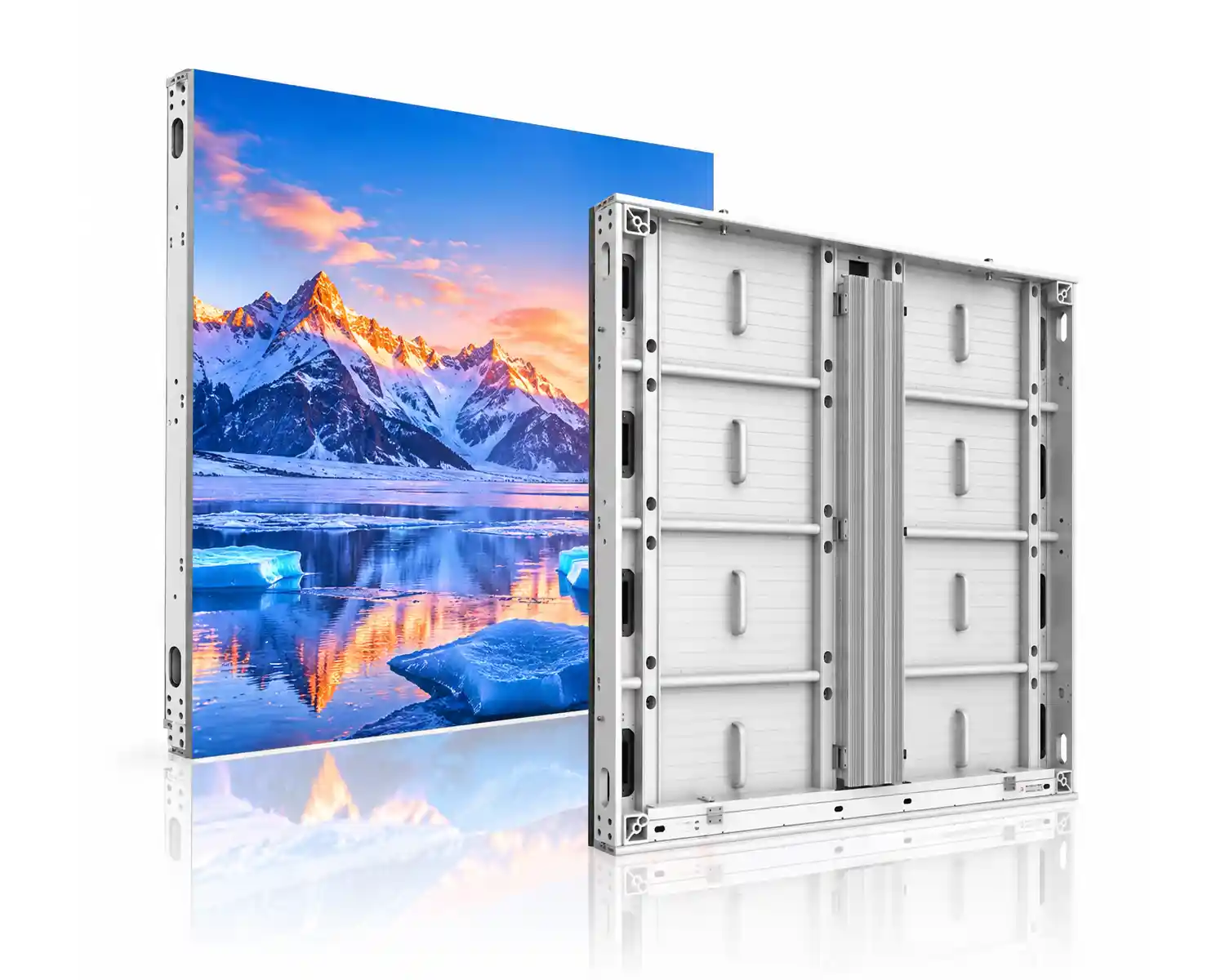
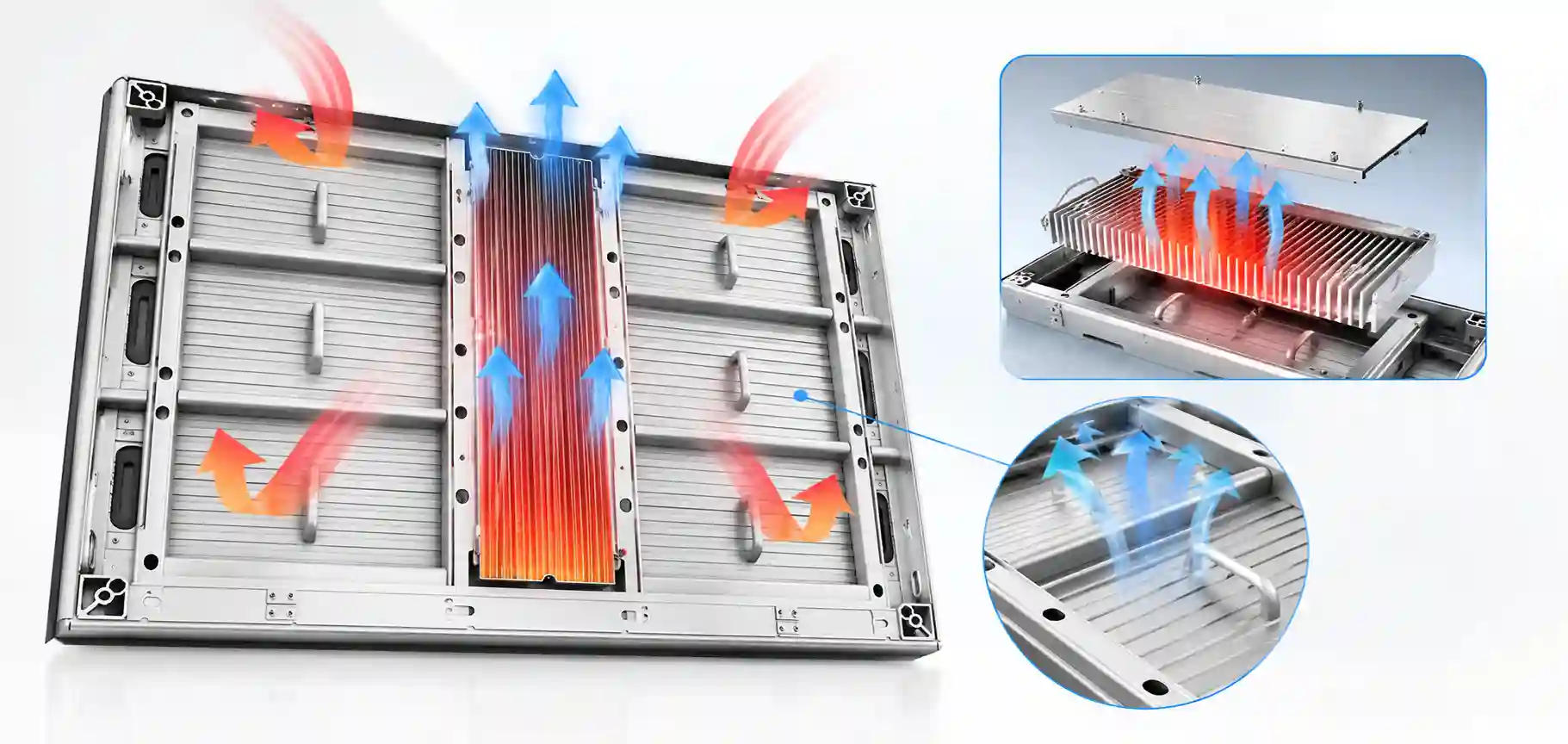
The chain value brought by common-cathode is far more critical than electricity savings. First, slowing light decay and extending whole-machine life: the light decay speed of LED chips is strongly correlated with working temperature, and reducing heat generation at the source reduces the thermal stress of chips and driver ICs staying in high-temperature environments long term, delaying device aging and lowering later replacement and repair frequency. Second, lowering heat dissipation supporting load: the SW900 and SW1000 use die-cast aluminum cabinets and fanless passive heat dissipation, and after pairing with common-cathode whole-machine heat generation is further reduced, both cutting supporting equipment purchase cost and avoiding the reliability risks of fan failure and dust and water ingress. Third, reducing carbon emissions and fitting ESG operations needs, meeting the green operations assessment of chain advertising networks and landmark projects.
A common misconception needs clarification: the value of common-cathode is by no means only power saving; low-temperature operation is the key for outdoor large screens to resist summer sun exposure and high temperature. Even if a traditional screen adds a better heat dissipation structure, if the circuit itself keeps producing a large amount of waste heat, it still easily shows hotspots, brightness decay, and device failures under persistent sun exposure; common-cathode reduces heat generation at the root, complementing the aluminum cabinet's passive heat dissipation to dually guarantee stable all-weather operation.
Which Projects Are Best Suited to the Common-Cathode Solution
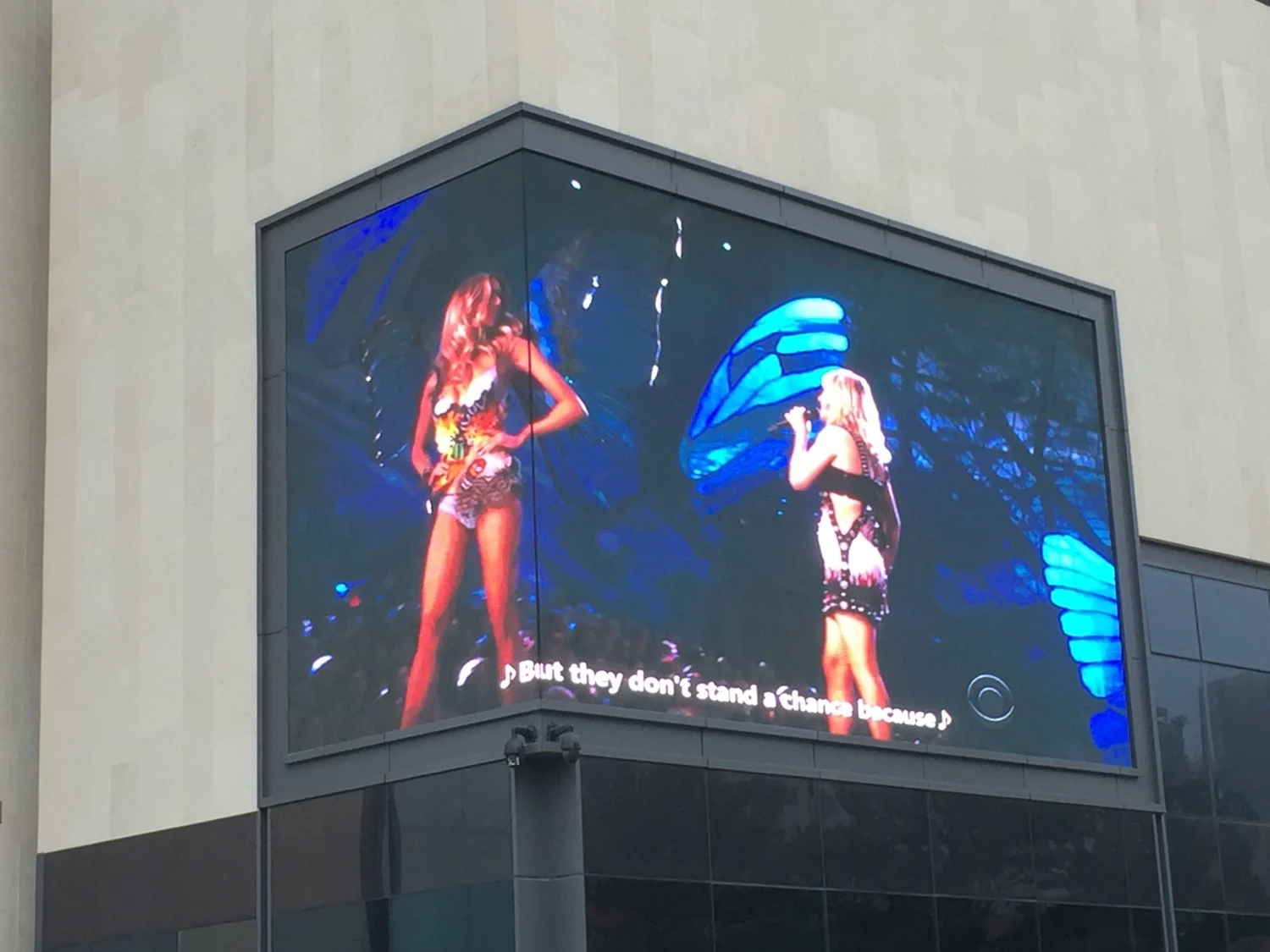
First, multi-point outdoor advertising network projects: many rooftop, business district, and transport hub points deployed at once, with the SW1000 lightweight aluminum cabinets, IP68 high protection, cloud intelligent control, and common-cathode energy efficiency, supporting 90° corners and curved splicing to achieve naked-eye 3D creative images while controlling long-term operations costs. Second, 24-hour large screens on rooftops, facades, and columns: the SW900 die-cast aluminum cabinets resist UV and do not easily deform, support front and rear dual maintenance, and the low-temperature operation brought by common-cathode can significantly improve reliability in extreme climates. Third, indoor high-density fine-pitch projects in high-electricity-price regions: the SN169 flip-chip COB and UT cable-free modules run 7×24, and common-cathode reduces air conditioning load, suited to long-on scenarios such as churches and large exhibition spaces.
Selection Reminder: Energy Efficiency Must Match the Hardware System
Common-cathode drive is not a "universal patch" that works independently; it needs to coordinate with the screen hardware design to deliver maximum value. The SW900 and SW1000 all-aluminum cabinets with fanless passive heat dissipation match the common-cathode low-heat feature, avoiding fan dust and failure; the indoor SN169 flip-chip COB relies on the cable-free module bottom texture to strengthen heat dissipation, and the SN43 integrated die-cast aluminum cabinet guarantees 7×24 operation—energy-efficiency drive plus excellent physical heat dissipation can truly release the common-cathode advantage.
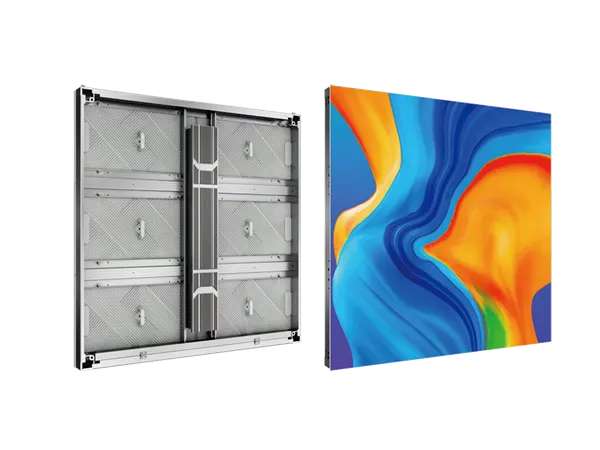
SW960 Series
Outdoor Advertising LED Display
- IP66 Waterproof
- Common Cathode
- Energy Saving
- Fanless Cooling
- Front & Rear Maintenance
- High Brightness
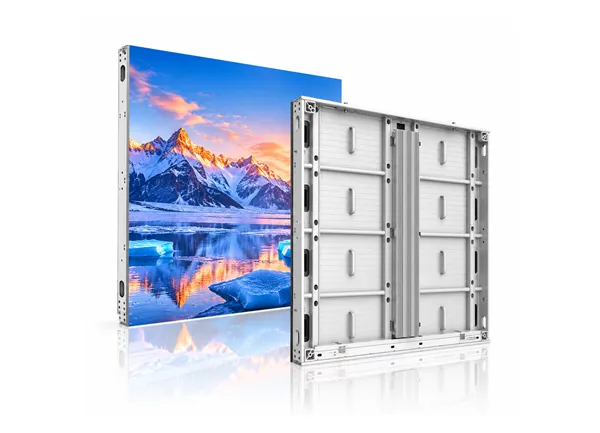
SW1000 Series
Outdoor Advertising LED Screen
- IP68 Protection
- 3D Corner Display
- Cable‑Free Design
- Fanless Cooling
- Front & Rear Maintenance
- Outdoor Advertising
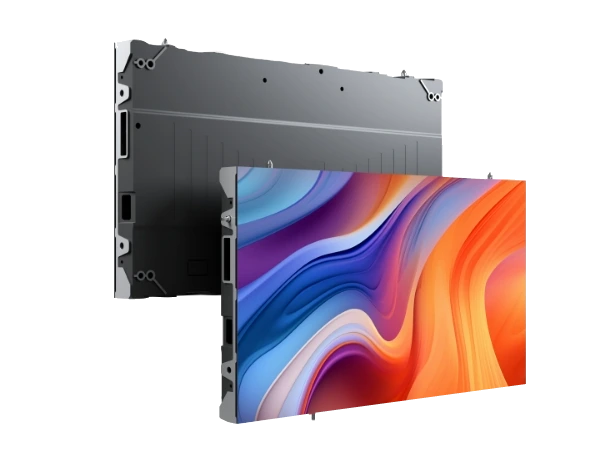
SN169 Series
Indoor Fine Pitch LED Display
- COB Technology
- Flip‑Chip LED
- Fine Pixel Pitch
- High Contrast
- HDR Display
- Front Maintenance
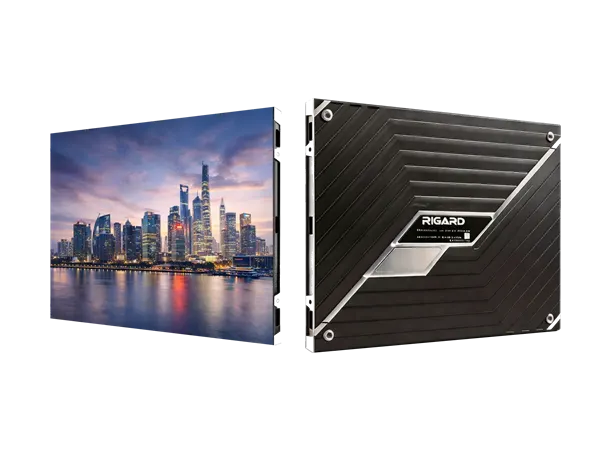
SN43 Series
Indoor LED Video Wall
- Cable‑Free Design
- Ultra‑Slim Cabinet
- Seamless Splicing
- High Contrast
- Front Maintenance
- Efficient Cooling
When evaluating project TCO (total cost of ownership), you cannot only compare equipment purchase quotes; you should include the electricity, light decay, repair and replacement, and heat dissipation support costs over a multi-year cycle. In regions with high electricity prices and long operating hours, the comprehensive benefit of the common-cathode solution quickly appears with screen operating time.