Outdoor LED Displays: Is Fanless Passive Heat Dissipation Reliable?
Edit By: RIGARD
Date: Sep 11, 2026
Many people hesitate over the heat dissipation solution when buying an outdoor LED advertising screen. Traditional outdoor large screens mostly carry cooling fans, but is a fan really the best solution for outdoor screens? If the fan is removed directly and the screen relies on passive heat dissipation, can it withstand high-temperature outdoor sun exposure and the complex, variable external environment?
Hidden Pain Points of Traditional Fan-Carrying Outdoor Screens
A fan is a moving mechanical part, and although it appears to solve the heat dissipation problem, it plants multiple hidden dangers. The outdoor environment is full of sand, dust, and moisture, and during air circulation, dust and water vapor continuously pour into the cabinet along the fan air duct; after long operation, fan bearings wear and age, needing replacement and maintenance within a few years, and once it fails and stops, internal heat cannot be exhausted and screen burnout from overheating easily occurs. At the same time, the continuously running fan produces noise, and when the screen lands on a street-facing business district or near residential areas, it also brings disturbance problems.
Principle of Fanless Passive Heat Dissipation
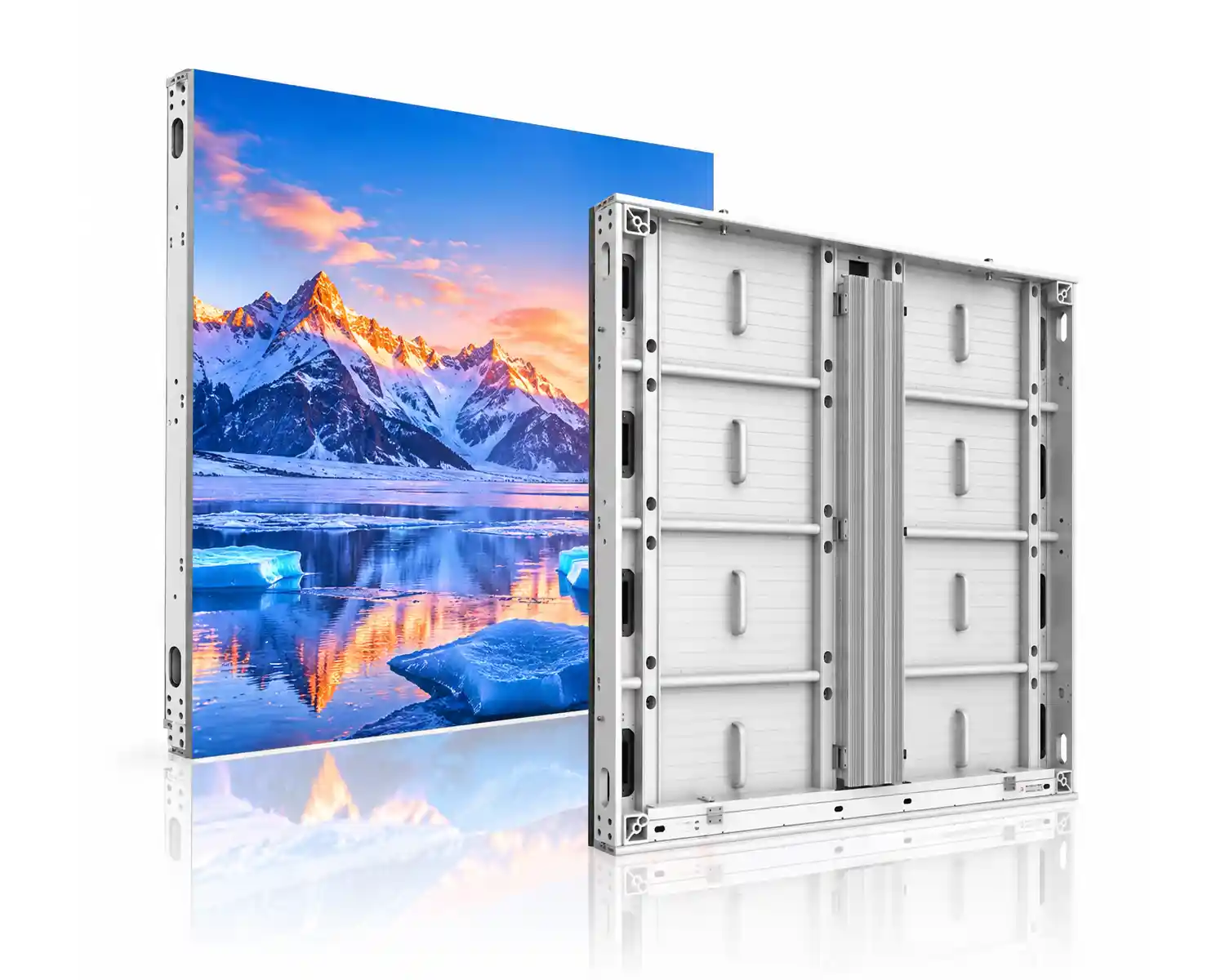
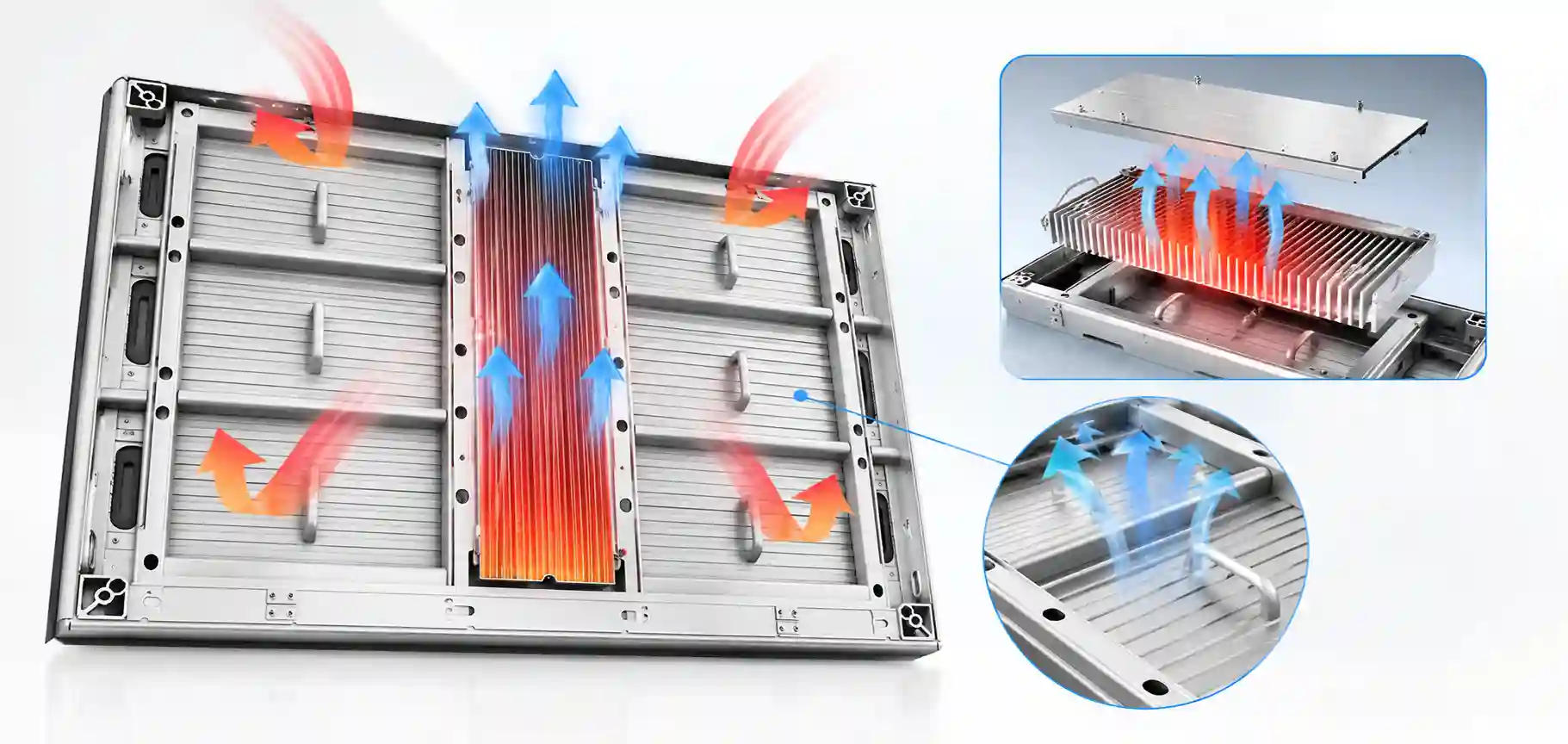
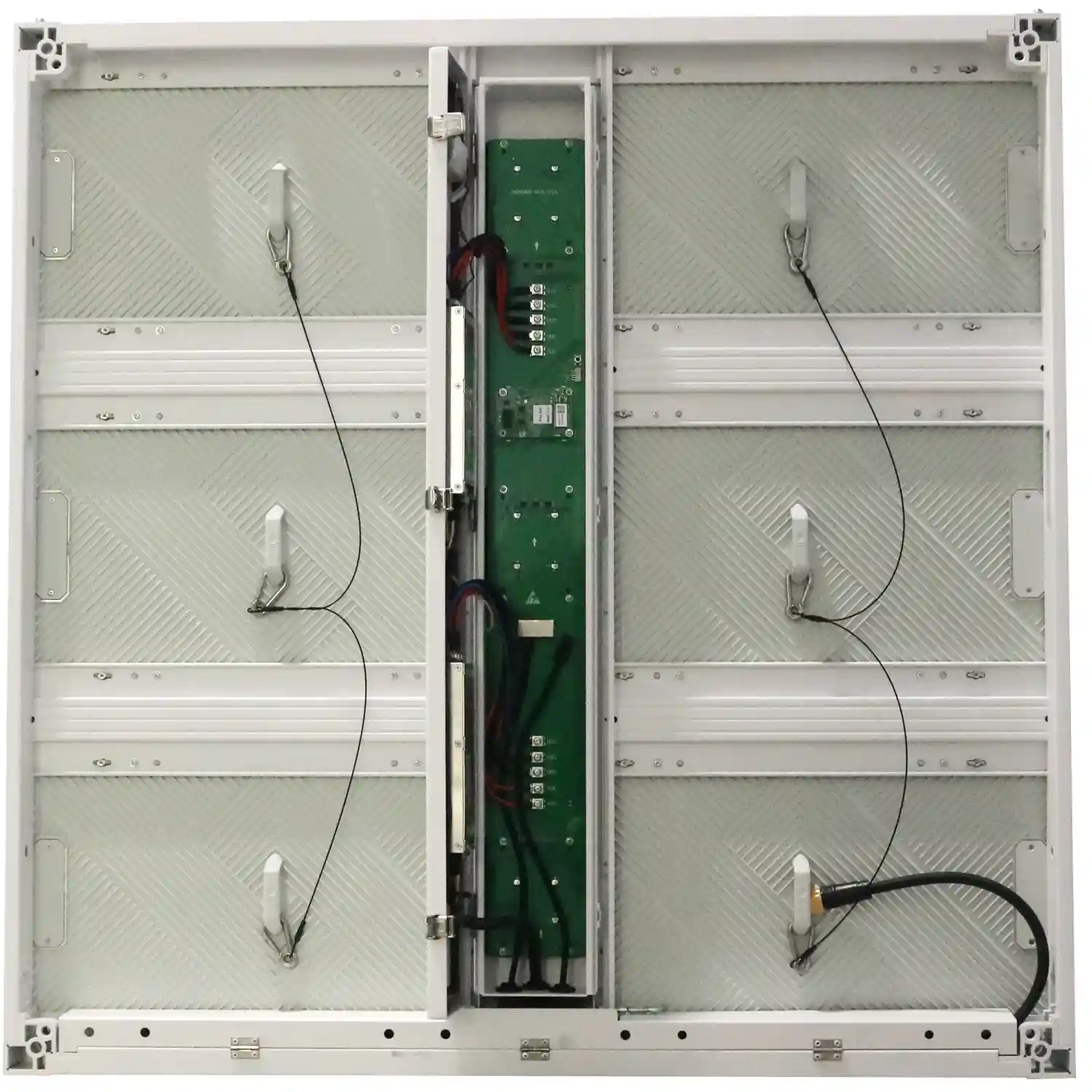
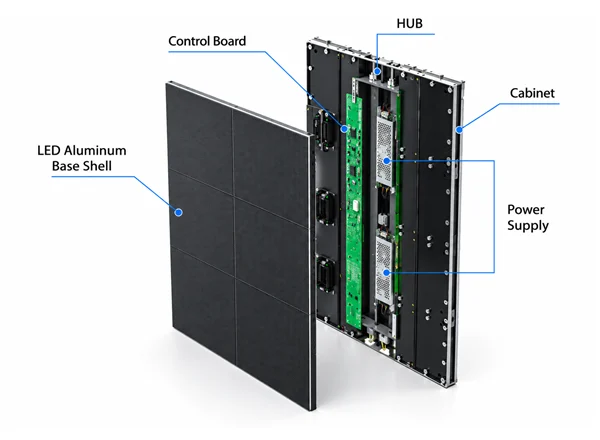
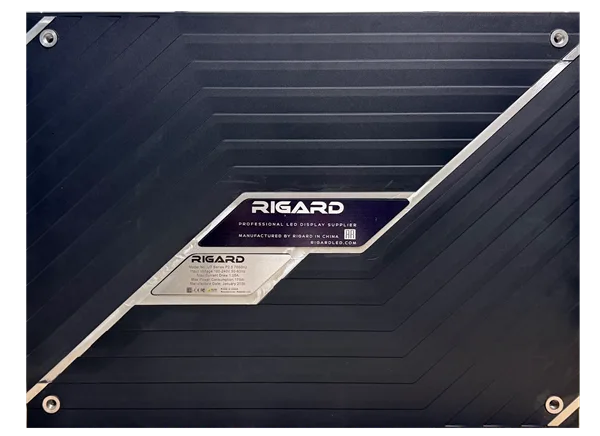
The SW1000 and SW960 both use fanless passive heat dissipation design; the whole system does not rely on a fan for forced air, but relies on the aluminum module back covers paired with the power box's large-area metal heat conduction structure to efficiently conduct the heat generated by modules and power supplies to the equipment shell, then completes natural heat exchange between the shell and the outside air, with zero fans in the whole machine and zero operating noise.
SW1000 Series
Outdoor Advertising LED Screen
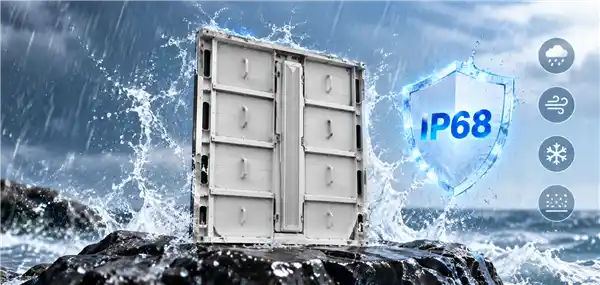
- IP68 Protection
- 3D Corner Display
- Cable‑Free Design
- Fanless Cooling
- Front & Rear Maintenance
- Outdoor Advertising
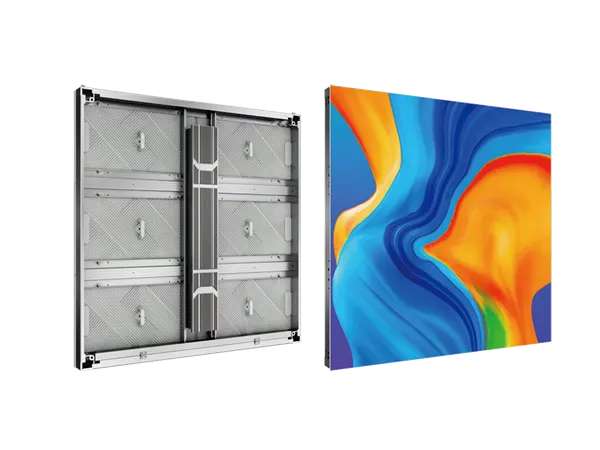
SW960 Series
Outdoor Advertising LED Display
- IP66 Waterproof
- Common Cathode
- Energy Saving
- Fanless Cooling
- Front & Rear Maintenance
- High Brightness
This solution is integrated hardware structure design, not simply canceling the fan. The all-aluminum cabinets and modules themselves have excellent heat conduction, both providing structural support and serving as a large-area heat dissipation carrier, with heat dispersed and exported evenly, avoiding local heat accumulation hotspots and ensuring stable screen temperature during long operation.
Two Core Benefits of Removing the Fan
First, completely eliminating the high-frequency failure source of the fan, with no more bearing loss or fan jamming risk, greatly reducing parts replacement and lowering maintenance workload, effectively extending whole-machine life. Second, with no fan ventilation duct in the cabinet, it is equivalent to building a physical barrier that can block dust, water vapor, and debris from intruding into the inner cavity; facing humid, rainy, or dusty scenarios, internal components receive better protection and the whole machine's environmental tolerance is significantly improved.
Paired with the optional common-cathode drive technology, it can further cut whole-machine power consumption 30%–50%, with equipment heat generation falling in tandem, reducing heat dissipation pressure at the source and complementing the passive heat dissipation architecture, while also lowering supporting air conditioning load.
Which Projects Are Especially Suited to Fanless Passive Heat Dissipation
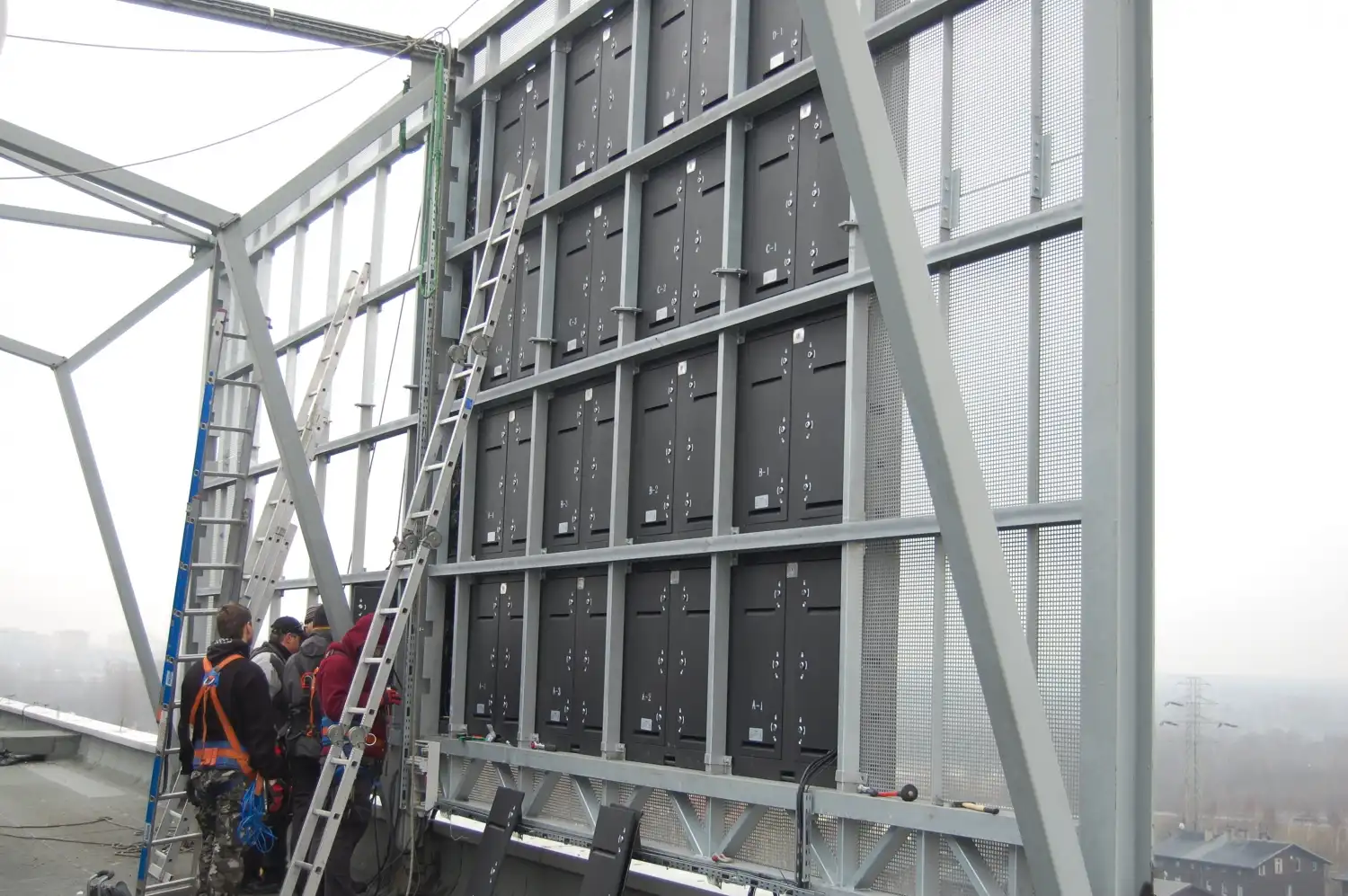
First, business district outdoor advertising screens near residential areas, with zero-noise operation avoiding disturbance; second, city landmark, building facade, and naked-eye 3D corner projects, where some facades do not allow external air conditioning equipment, and passive heat dissipation can perfectly fit installation limits; third, unattended points with limited maintenance conditions such as transport hubs and building exterior walls, reducing wearing moving parts and lowering on-site servicing frequency. Combined with the front and rear dual maintenance design and excellent protection and corrosion resistance, wall, column, and rooftop scenarios can all flexibly fit.
Fanless passive heat dissipation is not cutting configuration, but a structure-first heat dissipation approach: replacing mechanical fans with high-conduction metal structures, eliminating noise and wearing parts and strengthening cabinet sealing protection. For outdoor LED advertising projects, this is an engineering-verified, mature, reliable solution.